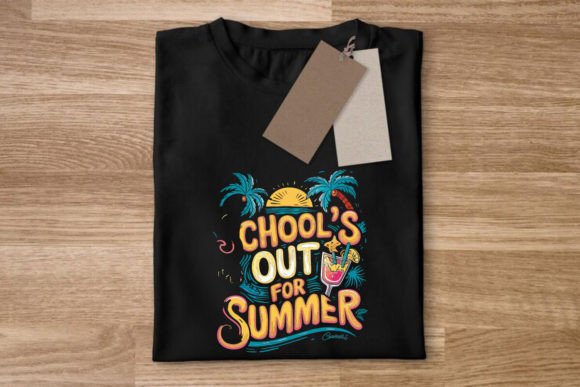
Reviewing Retro Last Day of School Design
As an embroidery designer who has spent countless hours digitizing and testing files for real-world application, I approach every new asset with a critical eye. We are not just looking at pretty pictures; we are looking at stitch paths, density management, and final product viability. Recently, I evaluated the Retro Last Day of School s out for Summe design to determine its worth for upcoming seasonal projects. This is not merely a graphic; it is a potential cornerstone for a craft business’s spring and early summer revenue stream.
First Impressions and Visual Personality
The immediate appeal of this design lies in its nostalgic aesthetic. The retro typography and layout evoke a sense of fun and relief that resonates deeply with parents and students alike. When I first loaded the file, I was looking for clean lines and balanced proportions. The visual personality is bold yet playful, making it suitable for a wide range of demographics. It does not feel overly childish, which is a common pitfall in school-themed designs, nor is it too rigid. It strikes a balance that allows it to work on everything from a toddler’s backpack to a high school senior’s commemorative sweatshirt.
In the context of Crafts and Graphics, this asset stands out because it avoids the cluttered look often found in free online resources. The spacing between letters appears sufficient for embroidery, reducing the risk of thread bridging or messy pull-outs during the stitching process. For an Etsy seller or small shop owner, this visual clarity translates directly to perceived quality.
Real-World Application: The Custom Tote Bag Scenario
To truly test the viability of the Retro Last Day of School s out for Summe design, I simulated a common commercial embroidery project: a custom canvas tote bag. These items are staples for end-of-year teacher gifts and student keepsakes. I envisioned placing the design centrally on a natural cotton canvas. The retro style pairs exceptionally well with the textured surface of canvas, where the slight irregularities of the fabric complement the vintage vibe of the typography.
When considering a handmade product like this, the scale is crucial. The design needs to be large enough to be legible but not so dense that it warps the fabric. In my assessment, this graphic asset pack provides the necessary resolution to scale appropriately. Whether you are creating a sweatshirt embroidery piece or a simple apron for a cooking class finale, the layout holds up. The mood it creates is celebratory, making it an ideal choice for personalized gifts that mark a milestone.
Performance on Different Fabrics and Hoops
One of the most critical aspects of any machine embroidery design is how it behaves on various substrates. I analyzed how this design would perform on stretchy fabrics versus stable ones. For a baby embroidery project, such as a onesie or a soft blanket, the design would need careful handling. If the original graphic contains fine details, these might get lost in the pile of a towel or the stretch of a knit fabric. Therefore, using a proper stabilizer is non-negotiable. A cut-away stabilizer would provide the necessary support for long-term wear, especially if this becomes a cherished holiday embroidery keepsake.
For curved surfaces like caps or hats, the design’s width becomes a limiting factor. While the height might fit within a standard cap hoop, the width of the phrase "s out for Summe" might require resizing. Here, I must advise caution. Resizing a raster image too much can lead to pixelation, while vector files like EPS and SVG allow for infinite scaling without loss of quality. Since the product description mentions high precision files, this flexibility is a significant advantage for apparel decorators working with diverse hoop sizes.
Technical Considerations for Stitching Clarity
While the provided description highlights EPS, SVG, and PNG formats, it is vital to understand the difference between a print graphic and an embroidery file. As a reviewer, I must point out that a PNG or SVG is not a stitch file. You cannot simply load these into your embroidery machine. However, they are invaluable for creating printable mockups and digital product previews. For the actual stitching, a professional digitizer would use these high-resolution graphics as a template to create satin stitch borders, fill stitch backgrounds, or running stitch details.
If you are converting this graphic into an embroidered patch or direct-to-garment embroidery, pay close attention to stitch density. Retro fonts often have thick strokes. If these are filled entirely with satin stitches, the thread buildup can become excessive, leading to puckering. A skilled digitizer might opt for a combination of fill stitches for larger areas and satin stitches for outlines to maintain definition without adding unnecessary bulk. This attention to detail affects the finished product’s durability, especially for items that will undergo frequent washing.
Navigating Potential Pitfalls
There are specific scenarios where this design requires careful execution. Small hoop sizes, such as 4x4 inches, may not accommodate the full phrase unless the text is stacked or abbreviated. Additionally, dark fabric presents a challenge for contrast. If you are stitching white thread on a navy blue sweatshirt, you must ensure that the underlay stitches are sufficient to prevent the background color from showing through. Testing the design on scrap fabric first is the best way to confirm thread color contrast and tension settings.
Another consideration is the tiny lettering. If the design includes small decorative elements or secondary text, these may not stitch out cleanly on textured fabrics like terry cloth or fleece. In such cases, simplifying the design or increasing the size is necessary to maintain professionalism. For commercial embroidery projects, consistency is key. A messy stitch-out can damage brand consistency and reduce customer trust.
Enhancing Product Value and Buyer Engagement
From a business perspective, the Retro Last Day of School s out for Summe design offers significant potential for increasing product value. A plain tote bag becomes a memorable gift when personalized with this vibrant graphic. For creative entrepreneurs, this design can be the centerpiece of a seasonal collection. It appeals to the emotional side of buying, tapping into the nostalgia of school years and the excitement of summer break.
Using high-quality design assets like this allows small shop products to compete with larger retailers. The professional look of well-executed embroidery signals quality to the buyer. Whether you are selling on Etsy or at local craft fairs, the presentation matters. Using the included PNG files to create attractive social media posts and printable mockups can drive engagement before the physical item is even stitched. This dual utility—both as a stitching guide and a marketing asset—makes the pack comprehensive for digital product sellers.
Final Designer Notes and Licensing
Before launching any campaign with this design, there are practical steps to take. First, confirm the licensing terms. While the product is categorized under Crafts and Graphics, you must ensure that commercial use is permitted for finished physical items. Second, check the file compatibility with your specific software. EPS and SVG files are widely supported, but always verify that your digitizing software can import them cleanly.
Test the design in black and white mockups to evaluate contrast without the distraction of color. Compare how it looks on light versus dark fabric backgrounds to determine the best thread colors for your inventory. Remember, the goal is to create a finished product that looks intentional and polished. By treating this graphic as a foundational element rather than a final solution, you can leverage its retro charm to create standout custom apparel and accessories.
In conclusion, the Retro Last Day of School s out for Summe design is a versatile and appealing asset for embroidery professionals. With careful attention to stitch density, fabric choice, and hoop size, it can elevate a simple item into a cherished keepsake. For the experienced designer, it offers a solid base for creativity; for the hobbyist, it provides a clear path to a professional-looking result. Always prioritize testing and proper stabilization to ensure that every stitch reflects the quality your customers expect.